
What Is a Jaw Joint?
A jaw joint is the connection between the lower jaw and the skull that lets the mouth open, close, move forward, and shift side to side. Each side of the face has one jaw joint. The joint includes bone surfaces, a cushioning disc, ligaments, and muscles that guide movement.
Quick Facts About Jaw Joint
Category
Temporomandibular joint anatomy
Used for
Assessing jaw movement and related muscle function
Common confusion
The joint is not the same as a TMJ disorder
Also called
Temporomandibular Joint, TMJ
Often discussed with
TMJ Treatment
Key Takeaways About Jaw Joint
- Two joints connect the lower jaw to the skull.
- A cushioning disc helps guide smooth jaw movement.
- Jaw joint and TMJ disorder describe different concepts.
How Jaw Joint Works
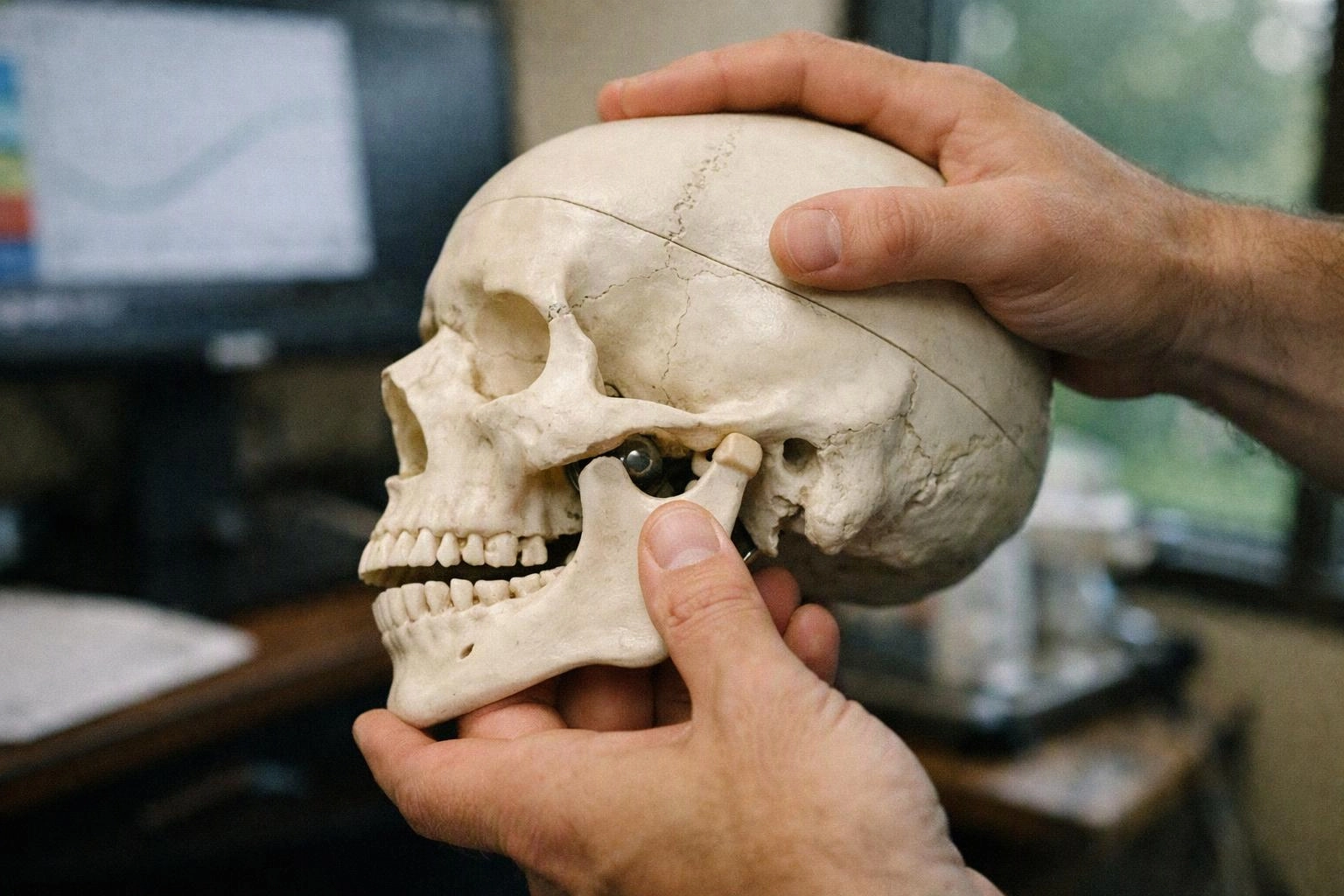
A jaw joint works as a paired hinge and sliding connection. Each joint sits in front of the ear, where the lower jaw meets the skull. A small disc separates the joint surfaces and helps distribute pressure as the mouth opens, closes, or shifts. Ligaments and muscles guide the motion and help limit excessive movement.
Related glossary terms: Joint Mobilization, Manual Muscle Testing, Range of Motion.
Clinicians consider jaw opening, side-to-side motion, muscle tenderness, and movement quality when assessing the area. Smooth motion usually involves coordinated action from both joints. A change on one side can affect the path of the lower jaw and may alter how the teeth meet. Temporomandibular joint is the anatomical name, while TMJ disorder describes a group of problems involving the joint or nearby muscles.
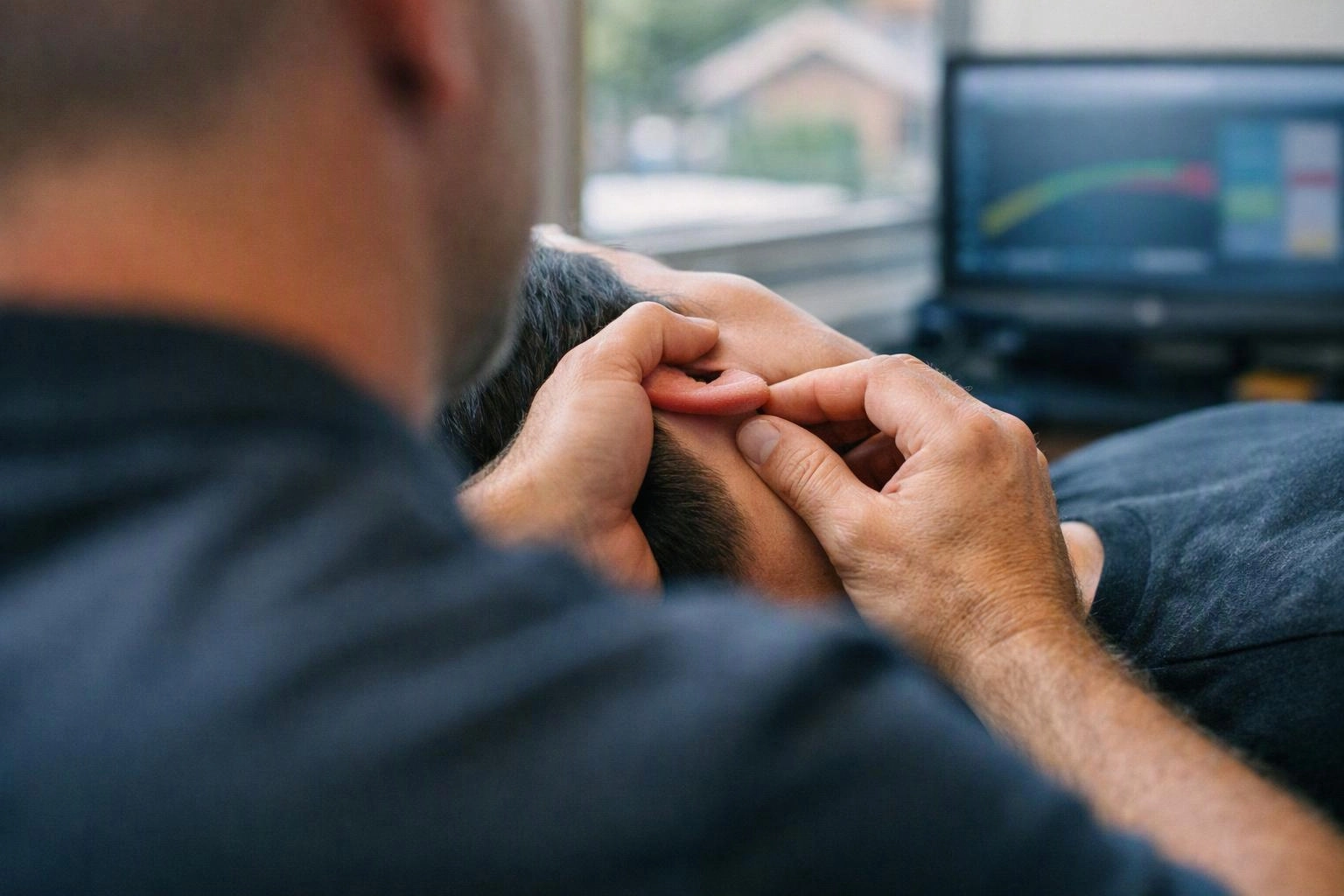
From the Arrowhead Clinic Chiropractic - Albany team
When we assess the jaw joint, we observe opening and closing, compare movement on both sides, and check nearby muscles for tenderness or tension. We also consider neck posture and movement because the jaw and neck can influence each other during daily activities. Our findings help guide TMJ Treatment discussions.
Jaw Joint in Practice: A Real-World Example
A person may notice jaw stiffness while chewing breakfast and feel the lower jaw shift slightly during opening. During TMJ Treatment, we may examine the movement pattern and nearby muscle tension to understand which areas need attention.
Related Services
Related Terms
Joint Mobilization
Joint mobilization is a manual therapy technique that uses controlled, low-velocity movements to assess and improve…
Manual Muscle Testing
Manual Muscle Testing is a hands-on assessment that examines how well a specific muscle or muscle…
Range of Motion
Range of Motion is the degree through which a joint can move in a specific direction…
Forward Head Posture
Forward Head Posture is a postural alignment pattern in which the head rests ahead of the…
Arrowhead Clinic Chiropractic - Albany
Have Questions About Jaw Joint?
Contact Arrowhead Clinic Chiropractic - Albany for practical guidance on Jaw Joint and related chiropractor work in Albany.