
What Is Kinesiology Tape?
Kinesiology Tape is an elastic adhesive strip placed on the skin to provide light support and sensory feedback during movement. The tape follows muscles or joints without fully restricting motion. Clinicians may use it as one part of sports injury care for temporary support, movement awareness, or comfort during activity and recovery.
Quick Facts About Kinesiology Tape
Category
Elastic support tape
Used for
Movement support and sensory feedback
Common confusion
Not rigid joint immobilization
Also called
K-Tape, Elastic therapeutic tape
Often discussed with
Sports Injury Treatment
Key Takeaways About Kinesiology Tape
- Elastic material allows movement during activity.
- Placement and tension should match the treatment goal.
- Kinesiology Tape is not the same as rigid athletic tape.
How Kinesiology Tape Works

Kinesiology Tape works through its elastic material and contact with the skin. A clinician places the tape along a muscle, joint, or nearby tissue based on the movement goal. The tape can provide light external support while allowing a person to move through a natural range.
Related glossary terms: Sprain and Strain, Range of Motion, Manual Muscle Testing.
Skin contact also gives the nervous system extra sensory information about movement and body position. That input may help a person notice how an area moves during exercise or daily activity. Rigid athletic tape serves a different purpose because it limits motion more directly. Kinesiology Tape does not replace an assessment of the underlying injury.
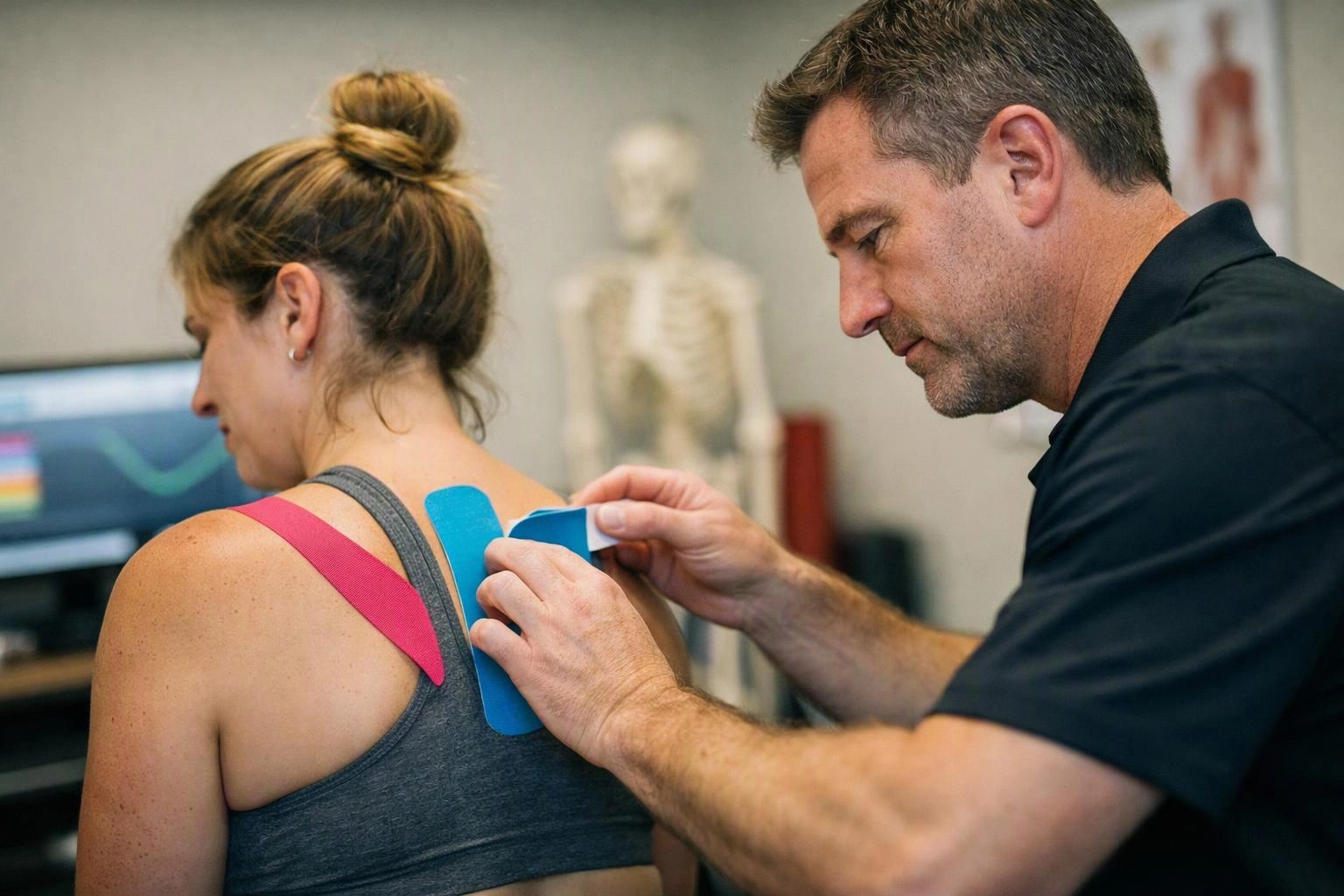
From the Arrowhead Clinic Chiropractic - Albany team
When we use Kinesiology Tape, we first consider the injured area, current movement, and the goal of Sports Injury Treatment. We apply the tape in a pattern that matches the activity and check how the skin and movement respond. We also explain that tape supports care but does not identify the cause of an injury.
Kinesiology Tape in Practice: A Real-World Example
A recreational runner with a mild ankle strain may receive Kinesiology Tape along the ankle and lower leg during Sports Injury Treatment. The tape can provide light movement feedback while the runner performs selected activities.
Related Services
Related Terms
Sprain and Strain
A sprain and strain are soft-tissue injuries that affect different structures. A sprain involves a ligament…
Range of Motion
Range of Motion is the degree through which a joint can move in a specific direction…
Manual Muscle Testing
Manual Muscle Testing is a hands-on assessment that examines how well a specific muscle or muscle…
Acute Injury
An acute injury is sudden tissue damage caused by a distinct event, such as a fall…
Arrowhead Clinic Chiropractic - Albany
Have Questions About Kinesiology Tape?
Contact Arrowhead Clinic Chiropractic - Albany for practical guidance on Kinesiology Tape and related chiropractor work in Albany.