
What Is Nerve Compression?
Nerve Compression is pressure on a nerve or nerve root that can interfere with normal nerve signaling. The pressure may develop near the spine, within surrounding soft tissue, or along a limb. Symptoms can include pain, tingling, numbness, or weakness in the area served by the affected nerve.
Quick Facts About Nerve Compression
Category
Nerve and musculoskeletal condition
Used for
Understanding radiating pain and altered sensation
Common confusion
Sciatica is a symptom pattern, not always the cause
Also called
Compressed Nerve, Nerve entrapment
Often discussed with
Sciatica Treatment
Key Takeaways About Nerve Compression
- Pressure may affect a nerve near the spine or along a limb.
- Symptoms follow the path or area served by the affected nerve.
- Sciatica describes a symptom pattern, not the source of pressure.
How Nerve Compression Works
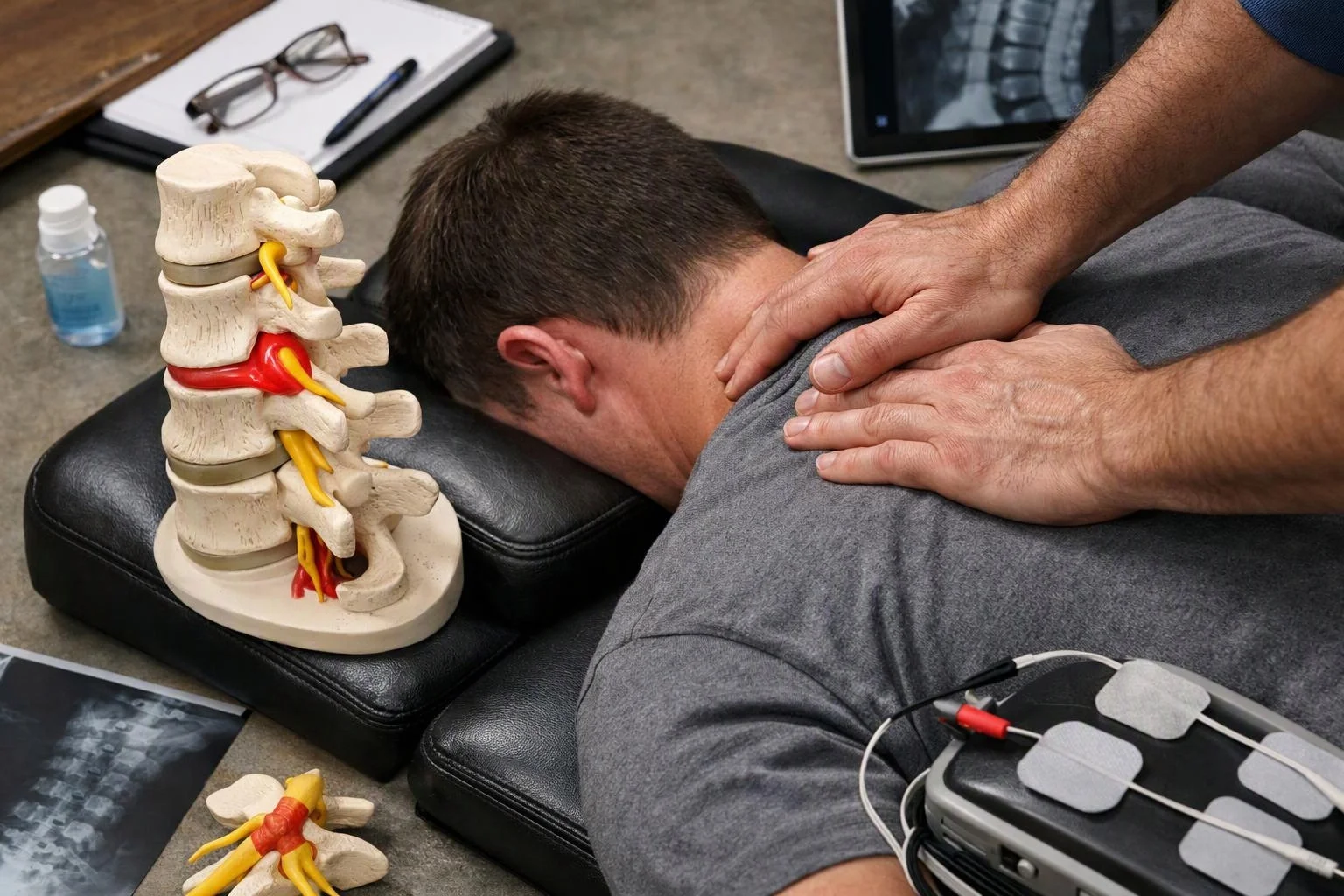
Nerve Compression occurs when nearby tissue places pressure on a nerve or nerve root. The pressure can change how nerve signals travel between the body and brain. A person may notice symptoms along the nerve's pathway, such as pain, tingling, numbness, or weakness.
Related glossary terms: Nerve Root, Neurological Exam, Lumbar Spine.
Assessment connects the symptom pattern with movement, sensation, strength, and the location of tenderness. A neurological exam can help identify changes in sensation or muscle control. The lumbar spine and surrounding hip tissues receive close attention when symptoms travel into the buttock or leg. The term describes a finding or mechanism, so the underlying source still needs careful evaluation.
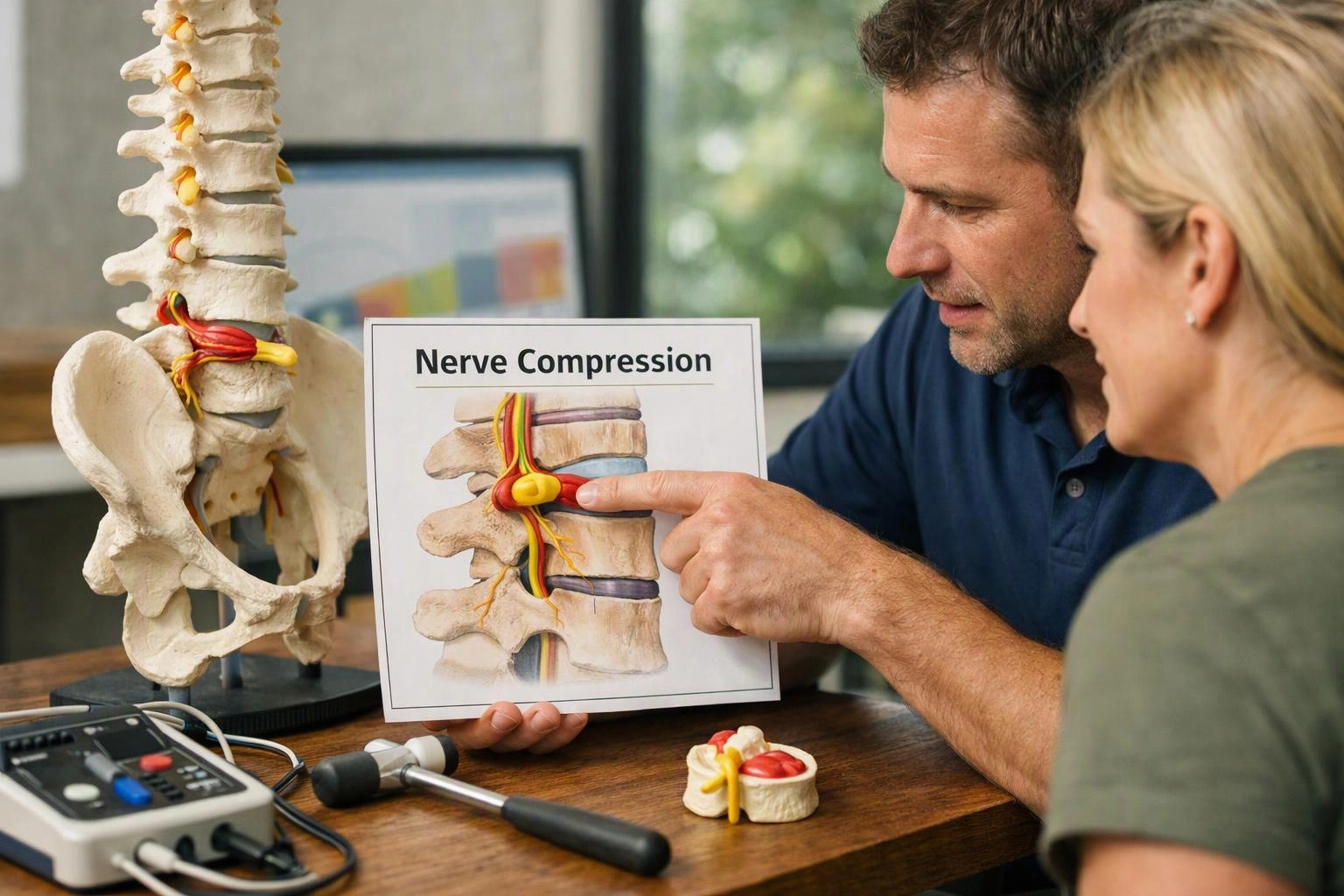
From the Arrowhead Clinic Chiropractic - Albany team
When we assess Nerve Compression, we review the symptom pattern, movement, sensation, and strength together. We also consider the lumbar spine, pelvis, and nearby soft tissue when sciatica symptoms extend into the leg. Our team uses these findings to guide care for the individual presentation.
Nerve Compression in Practice: A Real-World Example
A person with sciatica may feel aching in the lower back that travels through the buttock and leg. During an evaluation, the symptom path and changes in movement or sensation can help identify whether nerve compression may contribute.
Related Services
Related Terms
Nerve Root
Nerve Root is a bundle of nerve fibers that leaves the spinal cord through an opening…
Neurological Exam
A neurological exam is a clinical assessment of the nervous system. It checks functions such as…
Lumbar Spine
The lumbar spine is the lower section of the spinal column between the thoracic spine and…
Spinal Stenosis
Spinal Stenosis is a narrowing of the spaces within the spine that can reduce room for…
Arrowhead Clinic Chiropractic - Albany
Have Questions About Nerve Compression?
Contact Arrowhead Clinic Chiropractic - Albany for practical guidance on Nerve Compression and related chiropractor work in Albany.