Back, Neck, and Posture Concerns in Children: When to Seek an Assessment
Pediatric chiropractic care can assess child back, neck, and posture concerns, while red flags may require a pediatrician's evaluation. Arrowhead Clinic Chiropractic - Albany evaluates movement and musculoskeletal concerns through Pediatric Chiropractic Care and directs families to pediatric medical care when symptoms require it.
Request an Estimate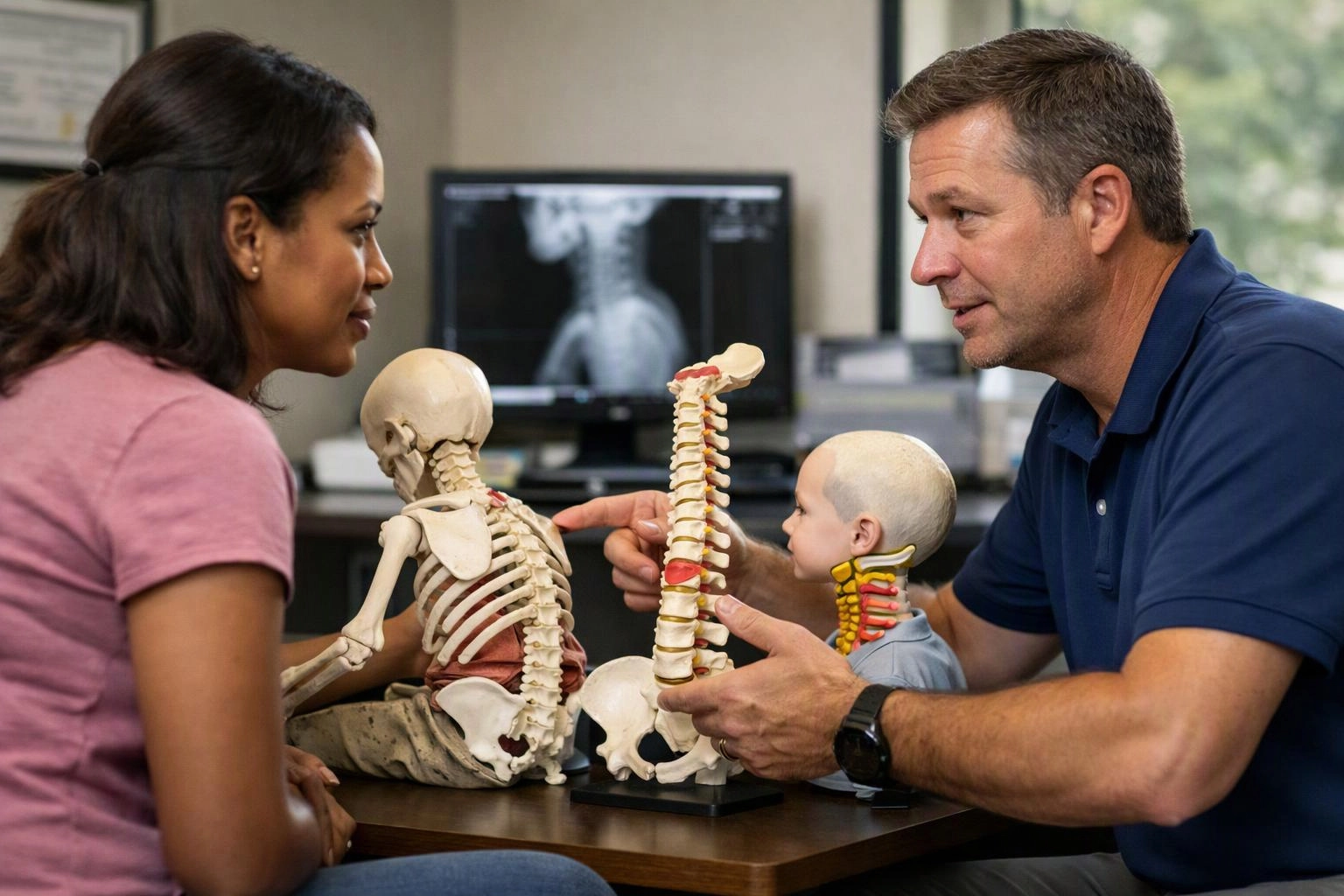
Child back pain, child neck pain, and posture concerns can have simple movement-related causes, but symptoms still deserve careful attention. Our team uses a symptom-first approach to help parents decide whether a musculoskeletal assessment is suitable or whether pediatric medical care is more appropriate.
Parents can learn more about our Pediatric Chiropractic Care approach before arranging an assessment.
When Should a Child With Back or Neck Pain Be Assessed?
A child with back or neck pain should be assessed when discomfort persists, returns with activity, follows an injury, limits normal movement, or concerns a parent.
Pediatric chiropractic assessment can help when pain appears linked to movement, sports, posture, or muscle strain. We review the child's symptoms and activity pattern before deciding whether care fits the concern.
Child back discomfort or child neck discomfort after a sports injury deserves attention when the child changes how they move or avoids normal activities. Recurring pain also matters, even when the discomfort seems mild between activities.
Signs and Symptoms Parents Should Notice
Parents should notice changes in comfort, movement, posture, and daily routines because these details help show how a concern affects the child.
Our team records the pattern rather than judging posture from one moment alone. A change that continues across activities gives more useful information for an assessment.
Common Causes of Back, Neck, and Posture Concerns
Common causes include physical strain, repeated movement, and habits that place the spine and surrounding muscles under stress.
These causes can overlap, so the same symptom may have more than one contributing factor. We connect the symptom history with movement findings before discussing care.
Can Sports Cause Back or Neck Discomfort in Children?
Yes, youth sports can contribute to back or neck discomfort through impact, overuse, awkward movement, or changes in training load.
Sports Injury Treatment begins with understanding how the discomfort started and which movements reproduce it. We consider contact injury, training mechanics, recovery habits, and the child's ability to move comfortably.
Return to activity should match the child's symptoms and movement. Our team can discuss activity modification and help parents understand when further medical evaluation is needed.
When Should a Pediatrician Assess a Child Instead?
A pediatrician should assess a child when back or neck symptoms include serious injury, neurological changes, fever, unexplained illness, or symptoms outside a musculoskeletal concern.
Warning signs need a medical decision before routine chiropractic care. The table below separates concerns that may fit a musculoskeletal assessment from concerns that call for pediatric medical care.
| Situation | Recommended next step |
|---|---|
| Pain linked to posture, activity, or muscle tightness without warning signs | Arrange a musculoskeletal assessment and share the symptom history. |
| Serious injury, major impact, or sudden severe symptoms | Seek urgent medical evaluation. |
| Numbness, weakness, unusual coordination, or other neurological symptoms | Contact a pediatrician or seek urgent medical care based on severity. |
| Fever, unexplained illness, or symptoms that do not fit a movement concern | Arrange pediatric evaluation before musculoskeletal care. |
We can pause care and recommend a medical referral when the history or examination raises concern. Parents should use urgent medical services for symptoms that appear severe or rapidly worsening.
How We Assess Child Back, Neck, and Posture Concerns
Arrowhead Clinic Chiropractic - Albany assesses the child's symptoms, movement, posture, activity history, and injury context before deciding whether Pediatric Chiropractic Care is appropriate.
We begin with parent communication and a symptom history. Our team then observes posture and movement, considers sports participation, and looks for findings that may support a musculoskeletal concern.
A movement assessment does not replace pediatric evaluation when warning signs are present. We explain our findings clearly and discuss medical referral when the symptoms fall outside our scope of care.
What Parents Can Do to Support Comfortable Movement
Parents can support comfortable movement by reducing aggravating activities and observing how symptoms change during daily routines.
These steps are for comfort and observation, not a substitute for care when symptoms persist or worsen. Parents should stop an activity that causes sharp, increasing, or unusual symptoms and seek appropriate evaluation.
How We Plan Pediatric Chiropractic Care
Pediatric Chiropractic Care is planned around the child's symptoms, movement findings, activity needs, and parent consent.
Our team keeps the plan focused on the child's current needs and adjusts it when symptoms or activity demands change. Families seeking an exact cost can contact us for a quote based on the planned assessment and care.
When Should Parents Arrange an Assessment?
Parents should arrange an assessment when a child's back, neck, or posture concern persists, recurs, affects activity, or is difficult to explain.
Parent decision-making should also consider sports participation and changes in sleep, movement, or daily comfort. We can assess a movement concern and explain when a pediatric referral is the safer next step.
Arrowhead Clinic Chiropractic - Albany offers Free Consultations for families who want to discuss whether the concern fits our care. Contact us to arrange an assessment or ask about same-day service.
Questions About Child Back, Neck, and Posture Concerns
Can poor posture cause back pain in children?
Yes, poor posture can contribute to back pain in children by placing repeated stress on muscles and changing comfortable movement. Arrowhead Clinic Chiropractic - Albany observes posture alongside activity, symptoms, and movement rather than treating posture as the only cause.
Is chiropractic care appropriate for children with sports injuries?
Chiropractic care may be appropriate for a child with a sports injury when the concern appears musculoskeletal and no warning signs are present. We review the injury, assess movement, and recommend pediatric medical evaluation when the symptoms suggest serious injury or a non-musculoskeletal problem.
What should parents bring to a child's chiropractic assessment?
Parents should bring the child's symptom history, information about any injury, a list of activities that increase discomfort, and details about changes in sleep or movement. Parents can also bring relevant medical referral information and describe the child's sports participation.