
What Is Pelvic Balance?
Pelvic Balance is the functional relationship between the pelvis, lower spine, hips, and surrounding muscles during standing and movement. The term describes how these areas share motion and support, not a claim that every pelvic structure sits in a perfectly even position. Chiropractors consider pelvic balance during movement assessments and prenatal care.
Quick Facts About Pelvic Balance
Category
Functional movement concept
Used for
Posture and movement assessment
Common confusion
Not identical to pelvic symmetry
Also called
Pelvic Alignment
Often discussed with
Prenatal Chiropractic Care
Key Takeaways About Pelvic Balance
- Pelvic balance concerns coordination, not perfect symmetry.
- Movement and posture assessments help show how the pelvis functions.
- Pelvic balance is not the same as pelvic alignment on an image.
How Pelvic Balance Works
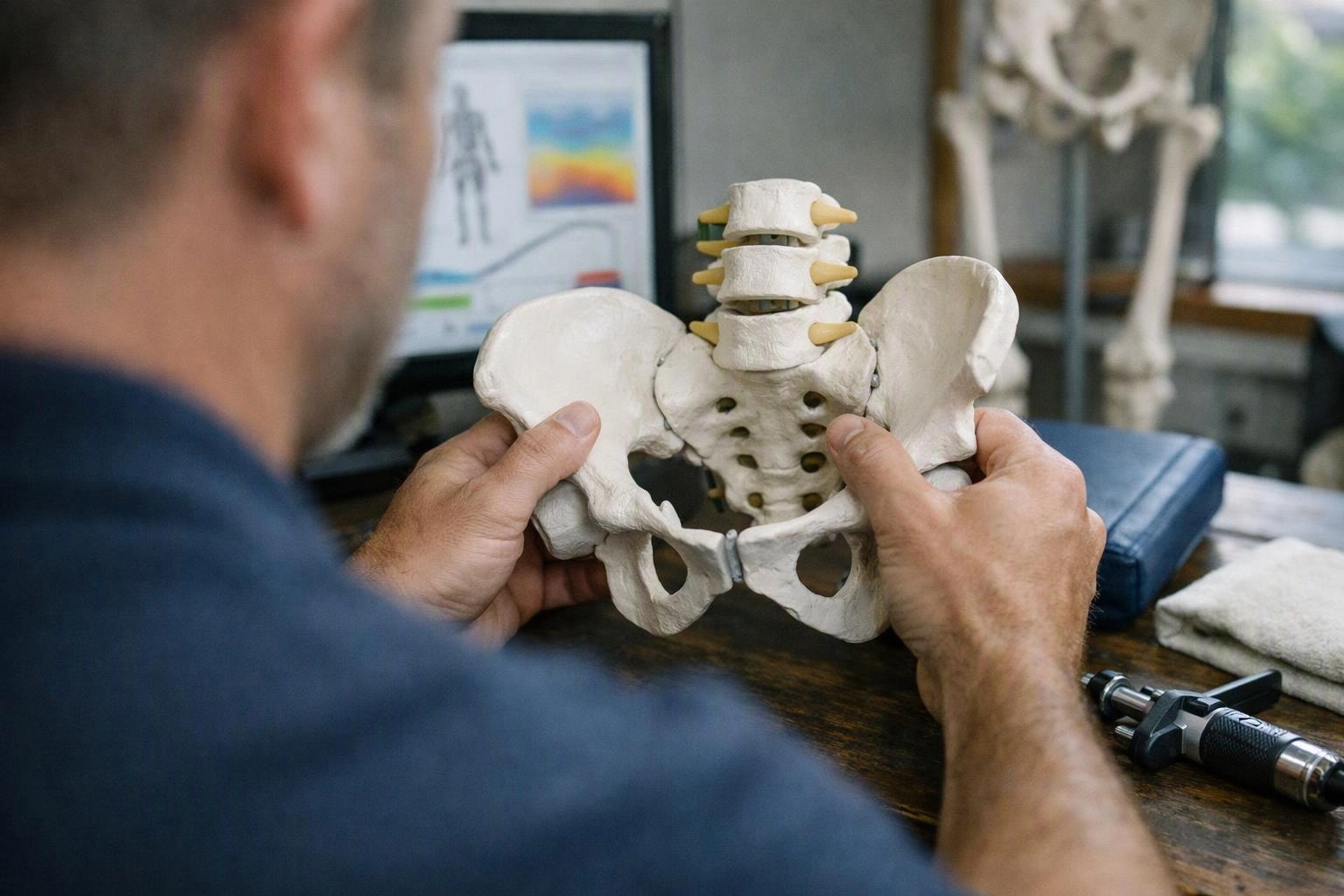
Pelvic Balance describes how the pelvis shares movement with the lower spine, hips, and nearby muscles. A balanced pattern allows these areas to coordinate during standing, walking, turning, and other ordinary movements. The pattern can change with posture, muscle tension, joint motion, or pregnancy-related physical changes.
Related glossary terms: Biomechanics, Lumbar Spine, Posture Assessment.
A chiropractor may observe pelvic position, weight distribution, walking patterns, and available movement during an assessment. The examination may also consider how the lumbar spine and hip joints respond as the body changes position. In prenatal care, pelvic balance refers to functional support and movement that can be monitored without assuming that perfect symmetry is required.
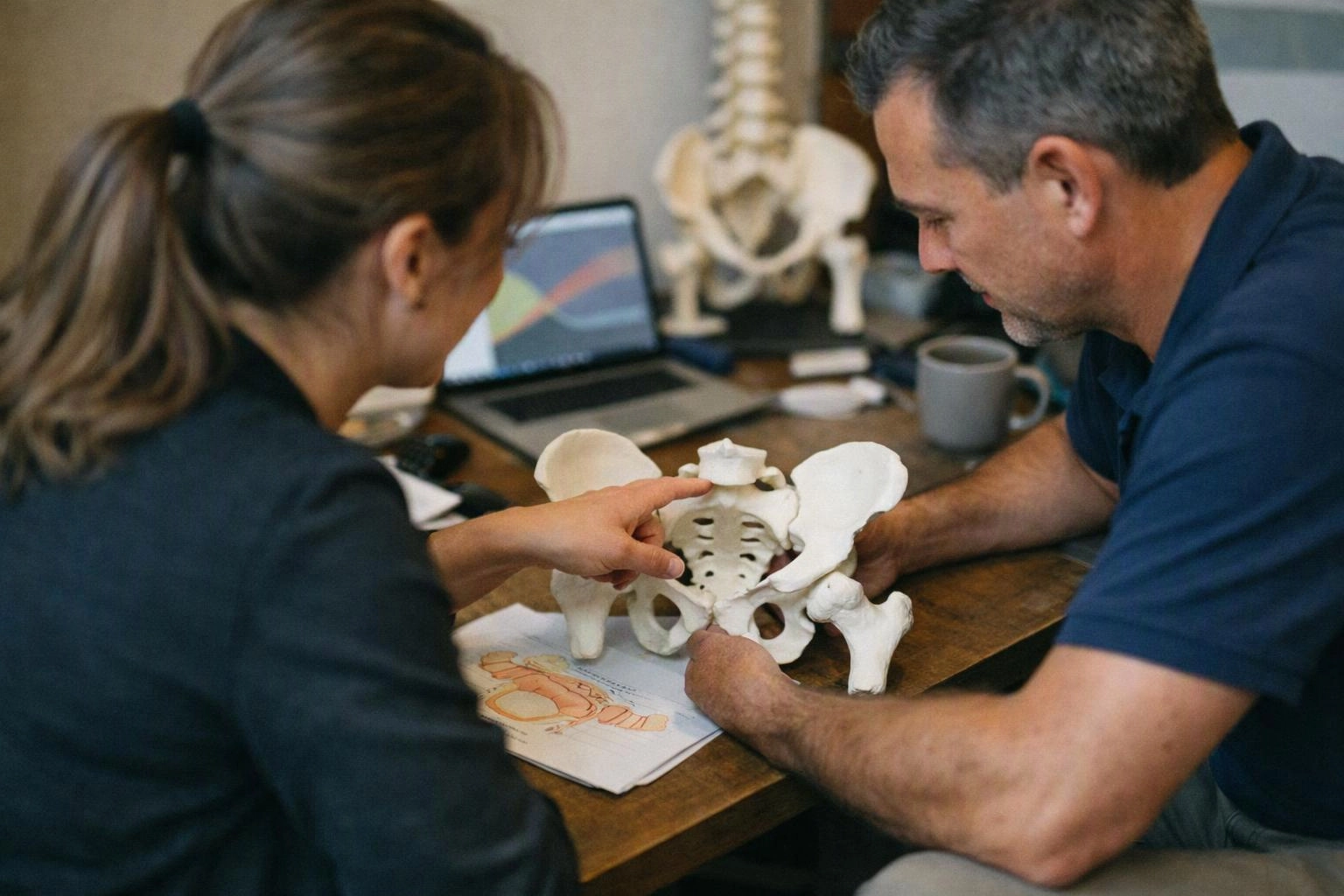
From the Arrowhead Clinic Chiropractic - Albany team
When we assess pelvic balance, we observe posture and movement alongside the lower spine and hips. Our team considers how prenatal changes affect comfort and coordination, then connects those findings with the person’s reported experience. We treat pelvic balance as a functional observation, not a diagnosis by itself.
Pelvic Balance in Practice: A Real-World Example
A pregnant patient may notice that standing feels different after spending time on one side. During Prenatal Chiropractic Care, a chiropractor may observe weight shifting, hip movement, and lower-back motion to understand the person’s pelvic balance.
Related Services
Related Terms
Biomechanics
Biomechanics is the study of how forces, motion, and body structure interact during movement. It examines…
Lumbar Spine
The lumbar spine is the lower section of the spinal column between the thoracic spine and…
Posture Assessment
A posture assessment is a structured review of how you hold your head, neck, shoulders, spine…
Range Of Motion
Range Of Motion is the amount and direction a joint can move through its available movement…
Arrowhead Clinic Chiropractic - Albany
Have Questions About Pelvic Balance?
Contact Arrowhead Clinic Chiropractic - Albany for practical guidance on Pelvic Balance and related chiropractor work in Albany.