
What Is Proprioception?
Proprioception is the body’s sense of joint position and movement. Sensors in muscles, tendons, ligaments, and joints send information to the brain, which helps coordinate posture, balance, and controlled motion. This sense allows you to know where an arm, leg, or spine is positioned without watching it directly.
Quick Facts About Proprioception
Category
Sensory and movement function
Used for
Balance, coordination, and body awareness
Common confusion
It is different from flexibility and pain sensation
Also called
Body Position Sense, Joint position sense
Often discussed with
Sports Injury Treatment
Key Takeaways About Proprioception
- It works without relying on vision.
- Joint position affects balance and movement control.
- Proprioception is not the same as flexibility.
How Proprioception Works
Proprioception works through sensory receptors in muscles, tendons, ligaments, and joints. These receptors detect changes in tension, position, and movement. Nerves carry that information to the brain, which combines it with input from vision and the vestibular system. The result helps your body adjust muscle activity during standing, walking, reaching, or landing.
Related glossary terms: Biomechanics, Gait Assessment, Neurological Exam.
Clinicians may observe proprioception through movement tasks that challenge balance, coordination, or joint control. A person may perform a familiar action with reduced visual feedback while the clinician watches for controlled movement and side-to-side differences. Findings from a neurological exam can add context when changes in sensation or coordination appear. Proprioception is one part of movement assessment, so results are considered alongside strength, range of motion, and pain patterns.
From the Arrowhead Clinic Chiropractic - Albany team
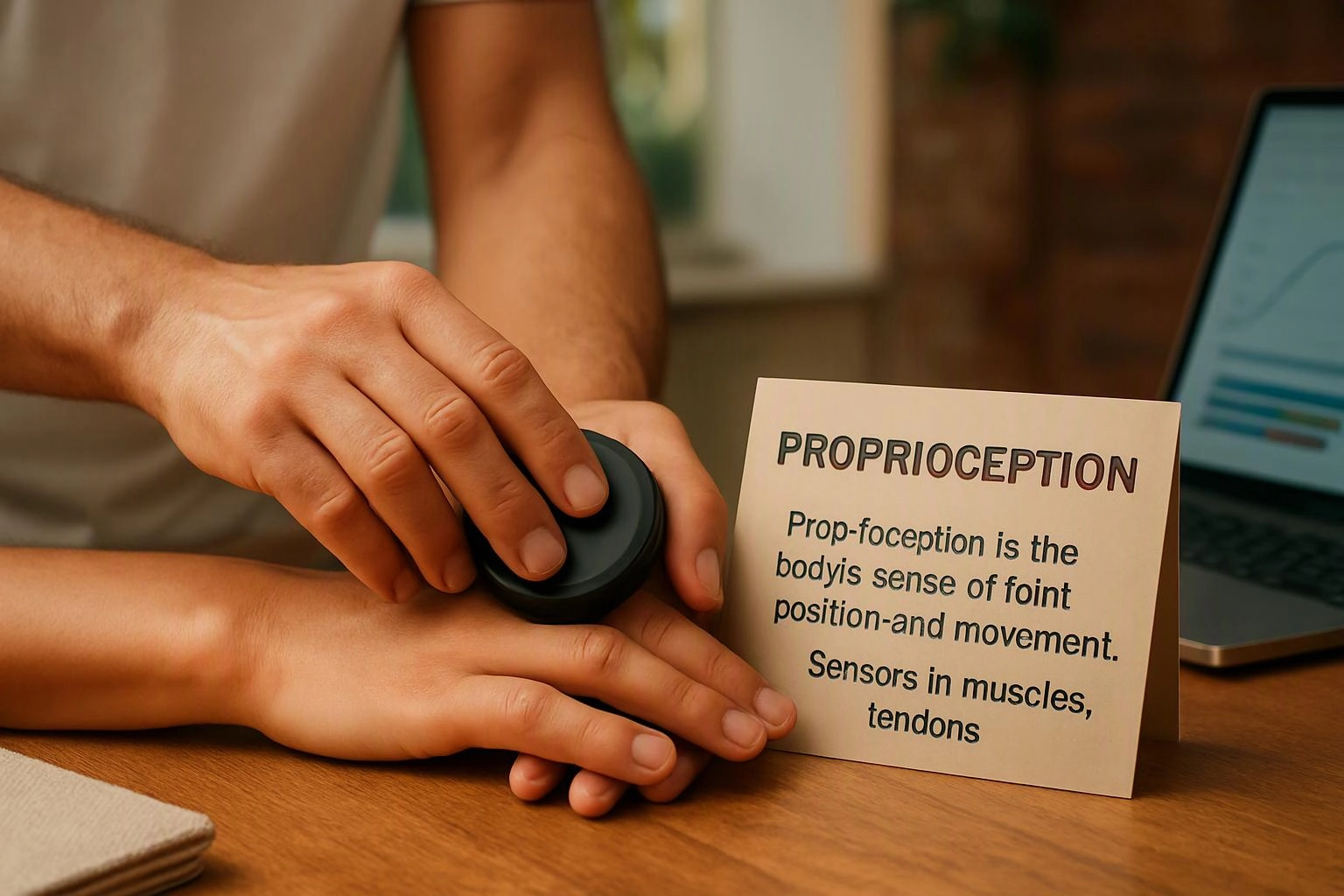
When we assess proprioception during Sports Injury Treatment, we watch how you control a joint during balance and movement tasks. We also consider pain, strength, range of motion, and coordination because these factors can influence performance. Our team uses the findings to guide the clinical assessment.
Proprioception in Practice: A Real-World Example
During Sports Injury Treatment, an athlete may stand on one leg and reach in different directions after an ankle injury. Reduced proprioception may appear as delayed corrections, uneven weight shifting, or difficulty keeping the knee aligned.
Related Services
Related Terms
Biomechanics
Biomechanics is the study of how forces, motion, and body structure interact during movement. It examines…
Gait Assessment
Gait Assessment is a structured review of how you walk or run, including foot contact, leg…
Neurological Exam
A neurological exam is a clinical assessment of the nervous system. It checks functions such as…
Range Of Motion
Range Of Motion is the amount and direction a joint can move through its available movement…
Arrowhead Clinic Chiropractic - Albany
Have Questions About Proprioception?
Contact Arrowhead Clinic Chiropractic - Albany for practical guidance on Proprioception and related chiropractor work in Albany.