
What Is a Soft Tissue Injury?
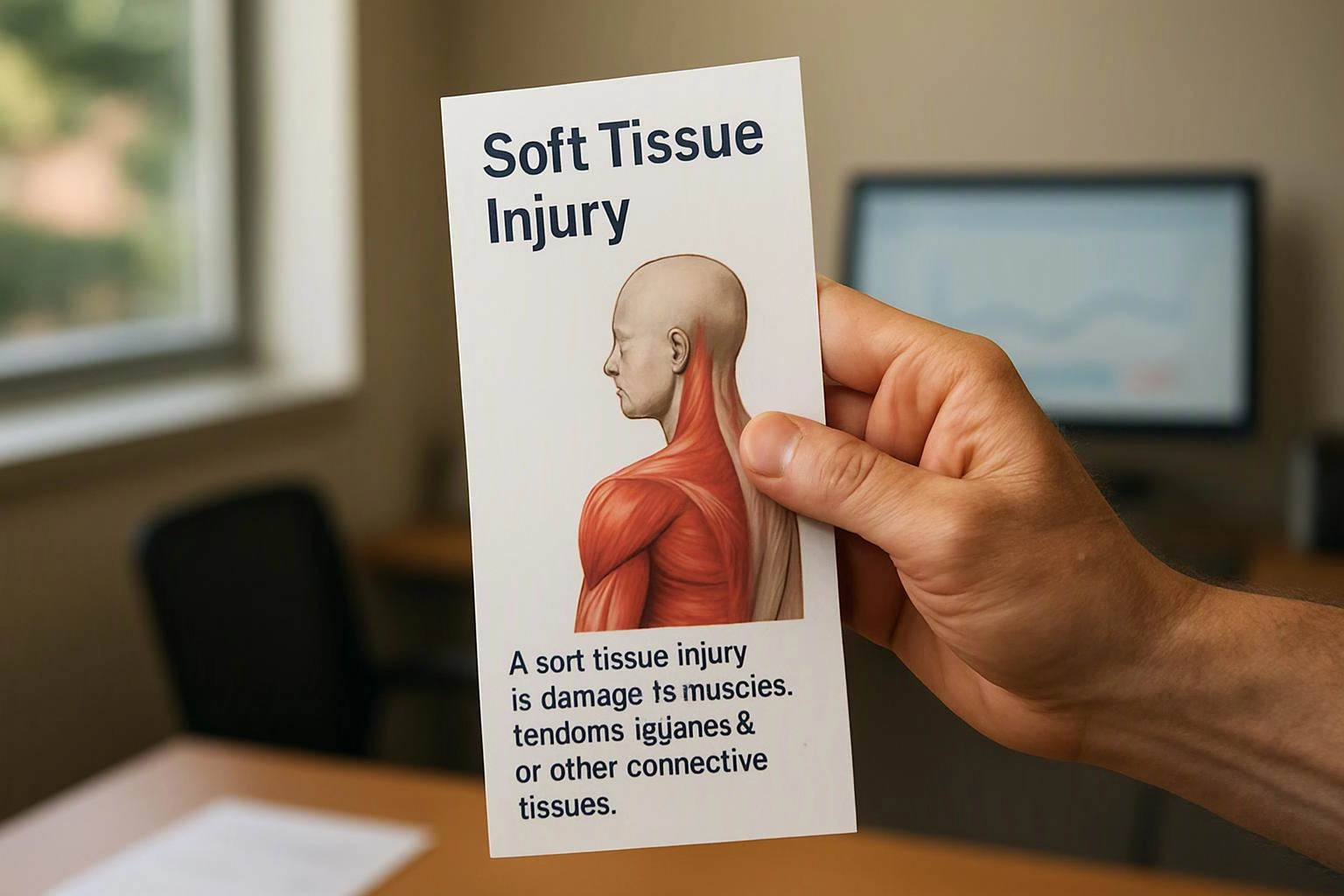
A soft tissue injury is damage to muscles, tendons, ligaments, or other connective tissues caused by force, overstretching, or repeated strain. Symptoms may include pain, swelling, stiffness, tenderness, or reduced movement. After a vehicle collision, soft tissue injuries commonly affect the neck, back, shoulders, or other areas exposed to sudden motion.
Quick Facts About Soft Tissue Injury
Category
Musculoskeletal injury
Used for
Describing damage to connective tissues
Common confusion
Often confused with bone or nerve injury
Also called
Soft Tissue Damage, Soft tissue strain
Often discussed with
Auto Accident Injury Treatment, Whiplash Treatment
Key Takeaways About Soft Tissue Injury
- Soft tissue injuries affect flexible support structures, not bones alone.
- Pain and limited movement can guide a clinical assessment.
- A soft tissue injury is not the same as a fracture.
How Soft Tissue Injury Works
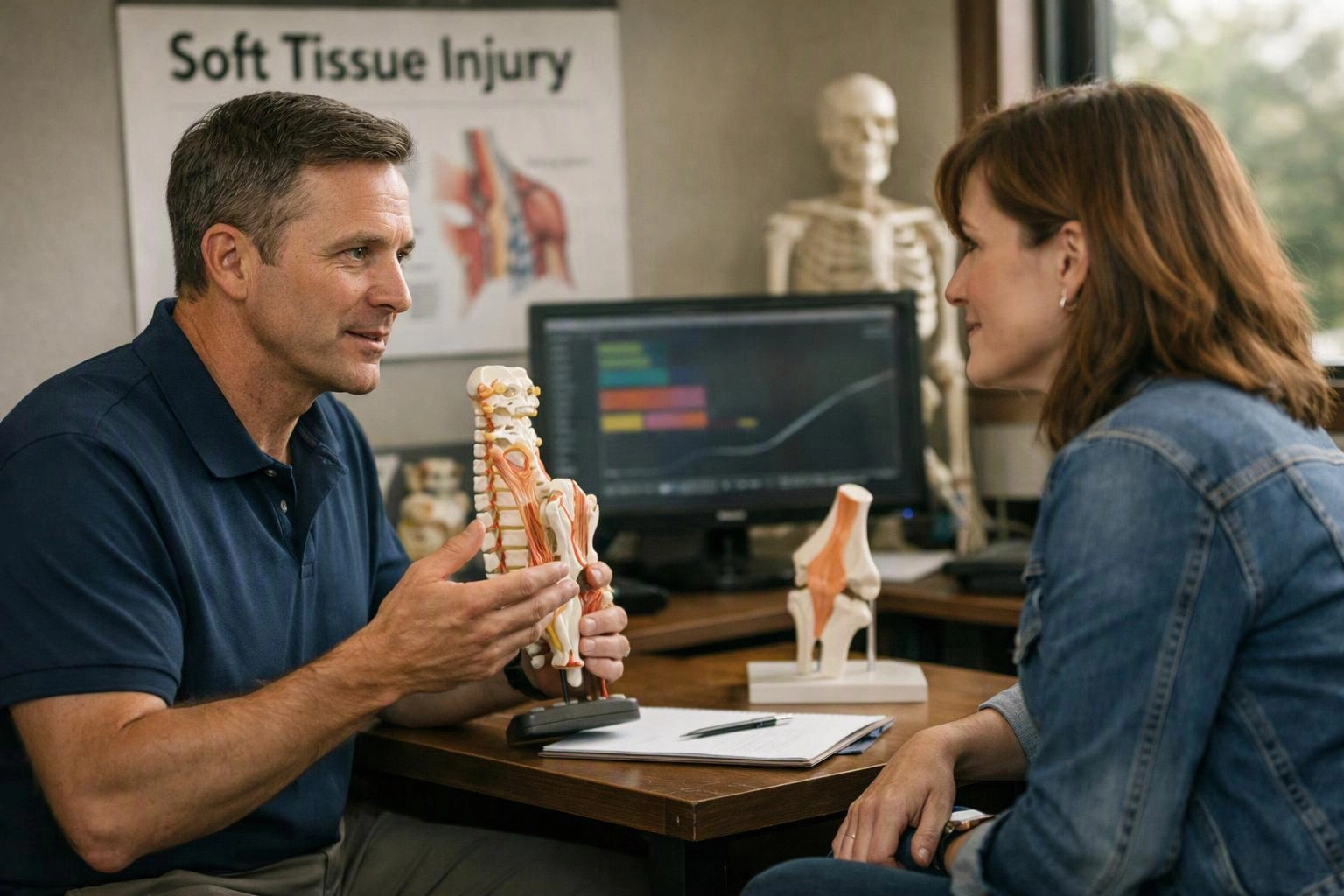
Soft tissue injury develops when force or strain disrupts normal tissue function. Muscles may become overstretched, tendons may become irritated, and ligaments may lose some of their normal flexibility. The affected area can become painful or stiff, which may change how you move.
Related glossary terms: Muscle Strain, Muscle Spasm, Manual Therapy.
Evaluation connects the reported symptoms with movement, tenderness, strength, and joint function. A clinician may compare the affected area with nearby regions to identify patterns that support the assessment. After an auto accident, a neck injury may involve muscles and ligaments even when the main complaint is reduced neck movement.
From the Arrowhead Clinic Chiropractic - Albany team
When we assess a soft tissue injury, we review how the injury occurred, where symptoms appear, and which movements reproduce discomfort. We also check movement and related body areas because pain after a collision may not stay limited to the point of impact. Our findings guide the care plan for auto accident injury treatment.
Soft Tissue Injury in Practice: A Real-World Example
A driver may develop neck stiffness and shoulder tenderness after a rear-end collision. The symptoms may reflect soft tissue strain from sudden movement, even when the person has no obvious bone injury.
Related Services
Related Terms
Muscle Strain
Muscle Strain is an injury to muscle fibers or the tendons that attach muscle to bone…
Muscle Spasm
Muscle Spasm is a sudden, involuntary tightening of muscle fibers that can limit movement and create…
Manual Therapy
Manual Therapy is a hands-on clinical approach that uses skilled touch to assess and treat muscles…
Range Of Motion
Range Of Motion is the amount and direction a joint can move through its available movement…
Arrowhead Clinic Chiropractic - Albany
Have Questions About Soft Tissue Injury?
Contact Arrowhead Clinic Chiropractic - Albany for practical guidance on Soft Tissue Injury and related chiropractor work in Albany.