Work-Related Back and Neck Injuries: Evaluation and Care Options
Chiropractic care for work injuries can evaluate movement, pain, and functional limitations, while Arrowhead Clinic Chiropractic - Albany provides work injury treatment and individualized back and neck care.
Request an EstimateCan Chiropractic Care Help With a Work Injury?
Chiropractic care can help evaluate and manage work-related back and neck injuries when the symptoms are appropriate for conservative musculoskeletal care. Arrowhead Clinic Chiropractic - Albany reviews the affected areas, movement, pain, and daily limitations before building a care plan.
A work injury may affect the muscles, joints, ligaments, discs, or nerves of the musculoskeletal system. Our team uses the injury history and physical findings to decide whether chiropractic care fits the situation or whether a medical referral is needed.
When Work Injury Treatment and Back or Neck Care Belong Together
Work injury treatment and back or neck care often belong together when the job-related event or task affects movement and function. The following situations may call for a coordinated approach:
These concerns can overlap because pain may change how the spine, joints, and muscles move. We connect the work history with the physical examination so treatment addresses the injury as a whole.
How We Evaluate a Workplace Back or Neck Injury
A workplace back or neck injury is evaluated through the symptom history, injury mechanism, physical findings, movement tolerance, and warning signs that may require medical referral. We begin with a clinical history that covers pain location, symptom changes, job duties, and the event or task linked to the injury.
Our examination may review range of motion, posture, spinal mobility, muscle tension, joint movement, and functional limitations. We also screen for neurological symptoms such as numbness, tingling, weakness, or changes in coordination.
The findings help us determine whether conservative care is suitable. When symptoms suggest a need for medical evaluation, we explain the reason for a medical referral and support appropriate care coordination.
What to Bring to the Evaluation
Information about the injury helps our team connect the symptoms with the workplace event and your current functional limits. Bring the following items when they are available:
- Symptom timeline: Note when symptoms began and how they have changed.
- Job duties: Describe lifting, reaching, sitting, standing, driving, or repeated movements.
- Incident description, including what happened and which body areas were affected.
- Employer documentation or a workplace injury report.
- Prior medical records and medication information.
What to Do After Hurting Your Back or Neck at Work
After a workplace injury, document the event, report it through the proper workplace process, and arrange an evaluation that matches your symptoms. These steps help preserve clear information for treatment planning and care coordination.
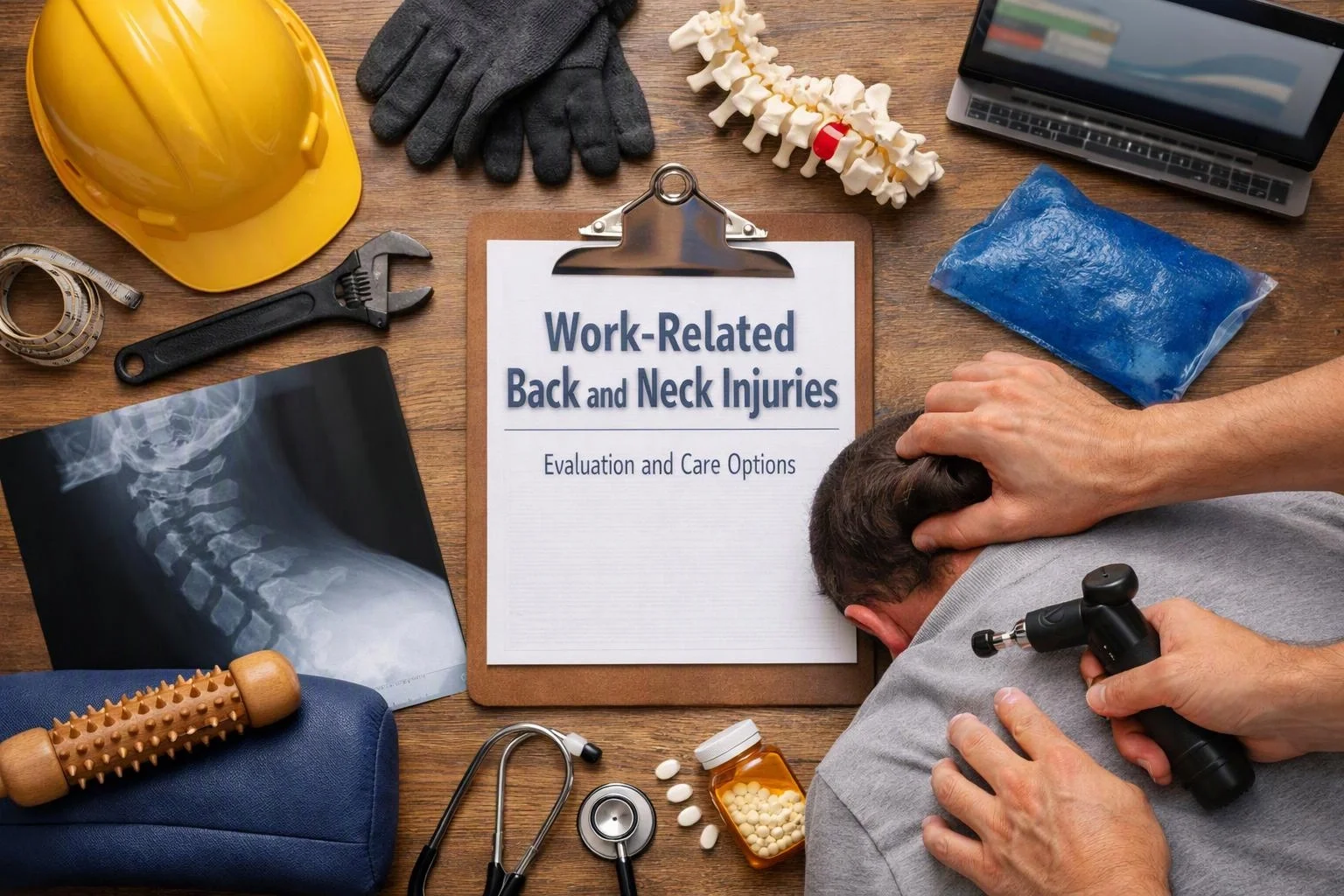
Our Work Injury Treatment approach starts with clear information about what happened and how the symptoms affect your work and daily activities.
How Work Injury Care and Back or Neck Treatment Work Together
Work injury treatment and back or neck treatment work together by connecting the injury history, examination findings, and care goals. Our team uses the findings to build a treatment plan that matches the condition and supports a safe return to activity.
Each part of the plan has a purpose. We explain the recommended sequence so you understand how evaluation, treatment, home care, and follow-up relate to the workplace injury.
What Treatment May Address in a Work-Related Injury
Treatment for a work-related injury may address spinal movement, joint mobility, muscle tension, soft tissue irritation, and postural strain. We select care based on the examination findings and your movement tolerance.
Back pain treatment and neck pain treatment may also focus on pain-related activity limits. Our team explains home care guidance that supports comfortable movement and a gradual return to activity when appropriate.
Some patients may benefit from a combination of approaches. When relevant, we can explain how manual therapy alongside chiropractic care may support treatment goals without separating the care from the overall plan.
When Back or Neck Symptoms Need Medical Attention
Back or neck symptoms need prompt medical attention when neurological changes, severe trauma, progressive weakness, or other serious warning signs accompany the pain. Seek medical evaluation for severe pain after traumatic injury, new or worsening numbness, tingling, loss of coordination, or bowel or bladder changes.
These symptoms may point to a condition that needs care beyond routine conservative treatment. We screen for warning signs during the injury evaluation and explain when a medical referral is appropriate.
How Arrowhead Clinic Chiropractic - Albany Starts Work Injury Treatment
Arrowhead Clinic Chiropractic - Albany starts work injury treatment by reviewing the injury, examining the affected areas, explaining the care plan, and discussing the factors that determine the cost. Our team asks about the injury mechanism, job duties, pain assessment, movement tolerance, and functional limitations.
We then explain the recommended treatment planning, possible care coordination, and home care guidance. Free Consultations are available for an initial discussion about your work-related back pain or work-related neck pain and the next appropriate step.
To request an evaluation or discuss a service quote, contact our team through the available contact option.
Questions About Work-Related Back and Neck Care
Should I see a chiropractor after hurting my back at work?
Yes, a chiropractic evaluation may be appropriate after a work-related back injury when symptoms fit conservative musculoskeletal care. Arrowhead Clinic Chiropractic - Albany reviews the injury and screens for warning signs before recommending care.
Can repetitive work cause neck pain?
Yes, repetitive work can contribute to neck pain by placing repeated demands on the muscles, joints, and posture. An evaluation connects the job duties with the pain pattern and movement limits.
What information should I provide about a workplace injury?
Provide the incident description, symptom timeline, job duties, employer documentation, prior medical records, and medication information. These details help connect the injury mechanism with your current symptoms and functional limitations.
Can chiropractic treatment be part of a work injury care plan?
Yes, chiropractic treatment can be part of a work injury care plan when the evaluation supports conservative care. The plan may include movement-focused treatment, home care guidance, and coordination with other medical or occupational services when needed.