
What Is Spinal Decompression?
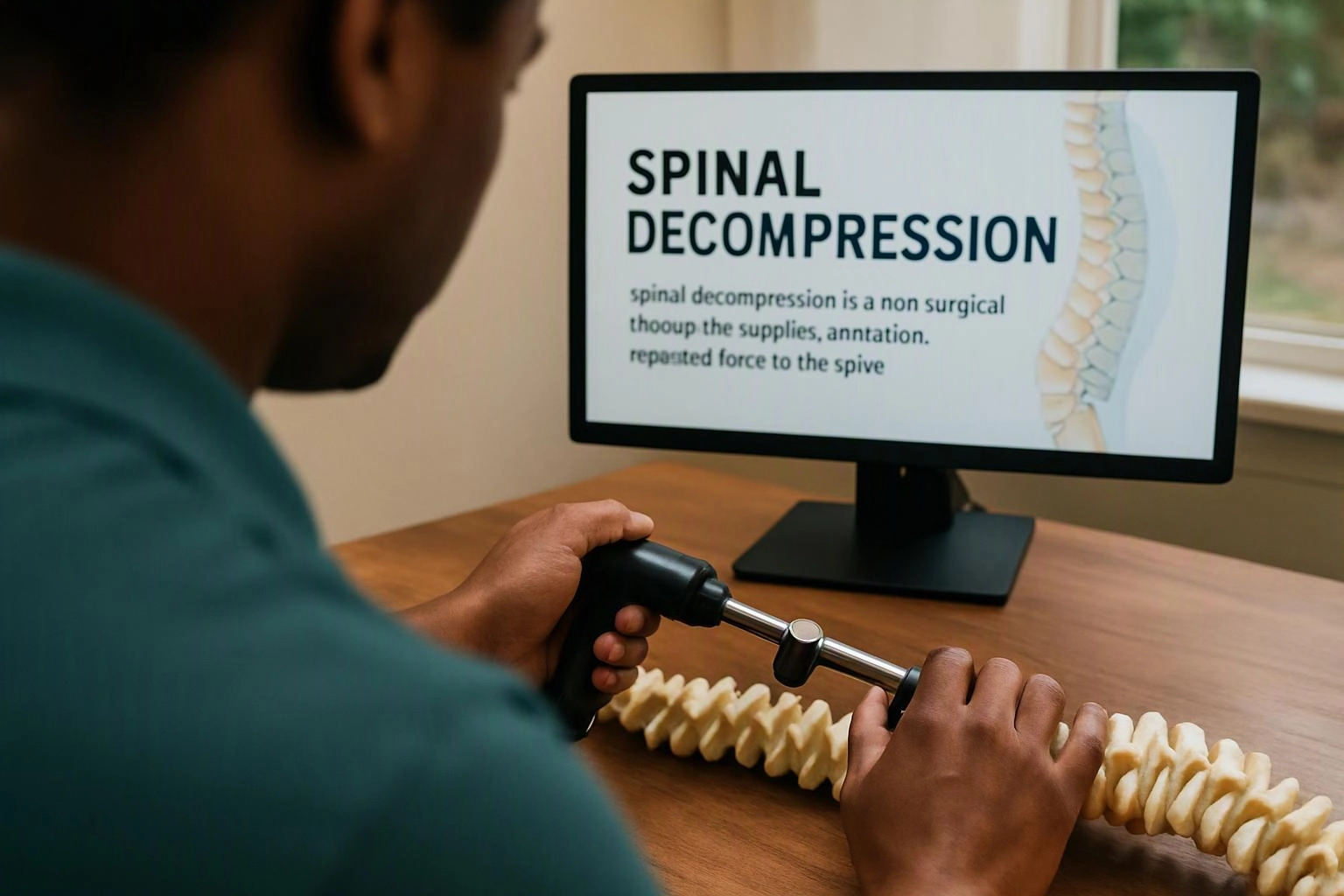
Spinal Decompression is a non-surgical therapy that applies controlled, repeated force to the spine through specialized positioning or equipment. The goal is to reduce mechanical stress around an affected spinal segment and support comfortable movement. Providers may consider it within care for disc-related back or neck symptoms after a clinical assessment. For more detail, see Insurance or Self-Pay for Chiropractic Care: What to Confirm.
Quick Facts About Spinal Decompression
Category
Non-surgical spinal therapy
Used for
Disc-related back or neck symptoms
Common confusion
Not every decompression method is identical to traction
Also called
Non-Surgical Spinal Decompression, Decompression Therapy
Often discussed with
Herniated Disc Treatment, Back Pain Treatment
Key Takeaways About Spinal Decompression
- It uses controlled force and positioning, not a manual adjustment.
- Care plans depend on the affected spinal region and clinical findings.
- Spinal decompression is not the same as surgery or traction in every setting.
How Spinal Decompression Works
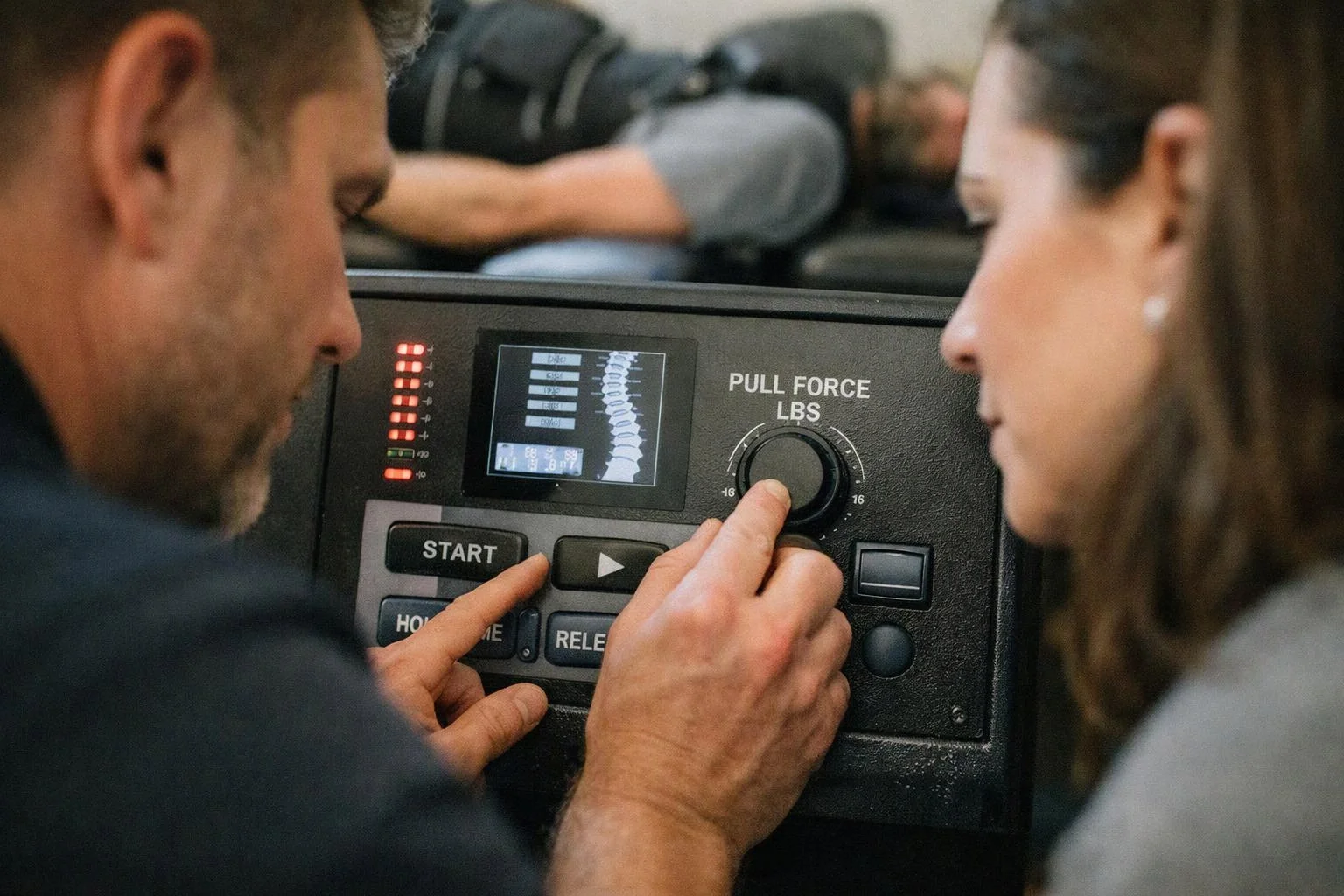
Spinal decompression uses controlled changes in spinal position and force to affect pressure and movement around a targeted area. A table or other clinical equipment may guide the motion while the patient remains positioned for the affected region. The approach differs from a standard manual adjustment because the force is delivered through a planned mechanical pattern.
Related glossary terms: Disc Bulge, Nerve Compression, Lumbar Spine.
Assessment helps determine whether the lumbar spine or cervical spine is the main treatment area. A provider may review symptoms, movement, strength, and other examination findings before selecting a method. Herniated disc treatment may include spinal decompression as one part of a broader plan, with progress judged by changes in comfort, function, and movement. Nerve compression can produce symptoms that require careful clinical consideration before this approach is selected.
From the Arrowhead Clinic Chiropractic - Albany team
When we assess spinal decompression, we connect the technique to the examination findings and the involved spinal region. Our team checks how movement, symptoms, and functional limits relate to herniated disc treatment before selecting or adjusting this approach. We also track practical changes during care, not just the equipment setting.
Spinal Decompression in Practice: A Real-World Example
A person with a herniated disc and localized low back symptoms may receive spinal decompression as part of a planned treatment approach. The clinician positions the person for the lumbar spine and reviews changes in movement and comfort during follow-up visits.
Related Services
Related Terms
Disc Bulge
A disc bulge is a condition in which the outer part of a spinal disc extends…
Nerve Compression
Nerve Compression is pressure on a nerve or nerve root that can interfere with normal nerve…
Lumbar Spine
The lumbar spine is the lower section of the spinal column between the thoracic spine and…
Cervical Spine
Cervical Spine is the upper section of the spinal column in the neck. It supports the…
Arrowhead Clinic Chiropractic - Albany
Have Questions About Spinal Decompression?
Contact Arrowhead Clinic Chiropractic - Albany for practical guidance on Spinal Decompression and related chiropractor work in Albany.