
What Is Work Conditioning?
Work Conditioning is a structured rehabilitation process that prepares a person to resume job duties after injury or physical limitation. The process uses task-related exercises to address strength, movement, endurance, coordination, and tolerance for work activities. A healthcare professional may tailor the program to the demands of a specific occupation.
Quick Facts About Work Conditioning
Category
Job-focused rehabilitation
Used for
Preparing for physical work duties
Common confusion
Often mistaken for general exercise
Also called
Work Hardening
Often discussed with
Work Injury Treatment
Key Takeaways About Work Conditioning
- Work tasks guide the exercises and physical demands.
- Progress focuses on function, movement quality, and activity tolerance.
- Work Conditioning is not the same as general fitness training.
How Work Conditioning Works
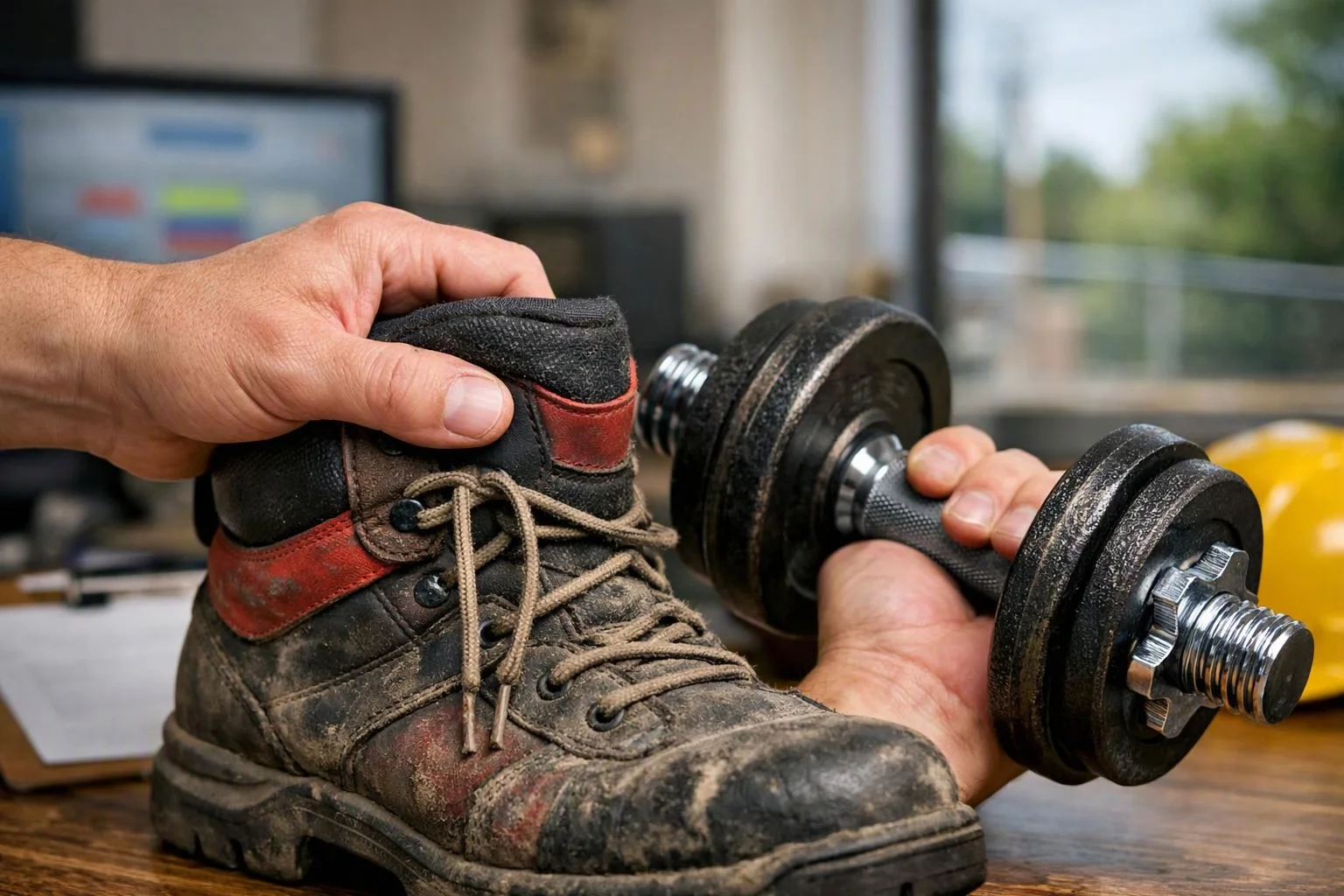
Work Conditioning connects rehabilitation exercises to the movements and physical demands of a job. A plan may include lifting patterns, carrying tasks, reaching, bending, standing, walking, or repeated movements. The selected activities reflect the person's current ability and the tasks required at work.
Related glossary terms: Range Of Motion, Biomechanics, Muscle Strain.
Progress is observed through movement quality, strength, coordination, endurance, and tolerance for job-related activity. Range Of Motion may be checked when restricted movement affects a task. Biomechanics also helps explain how posture, joint motion, and force affect work performance. The program can be adjusted as the person's responses and functional abilities change.
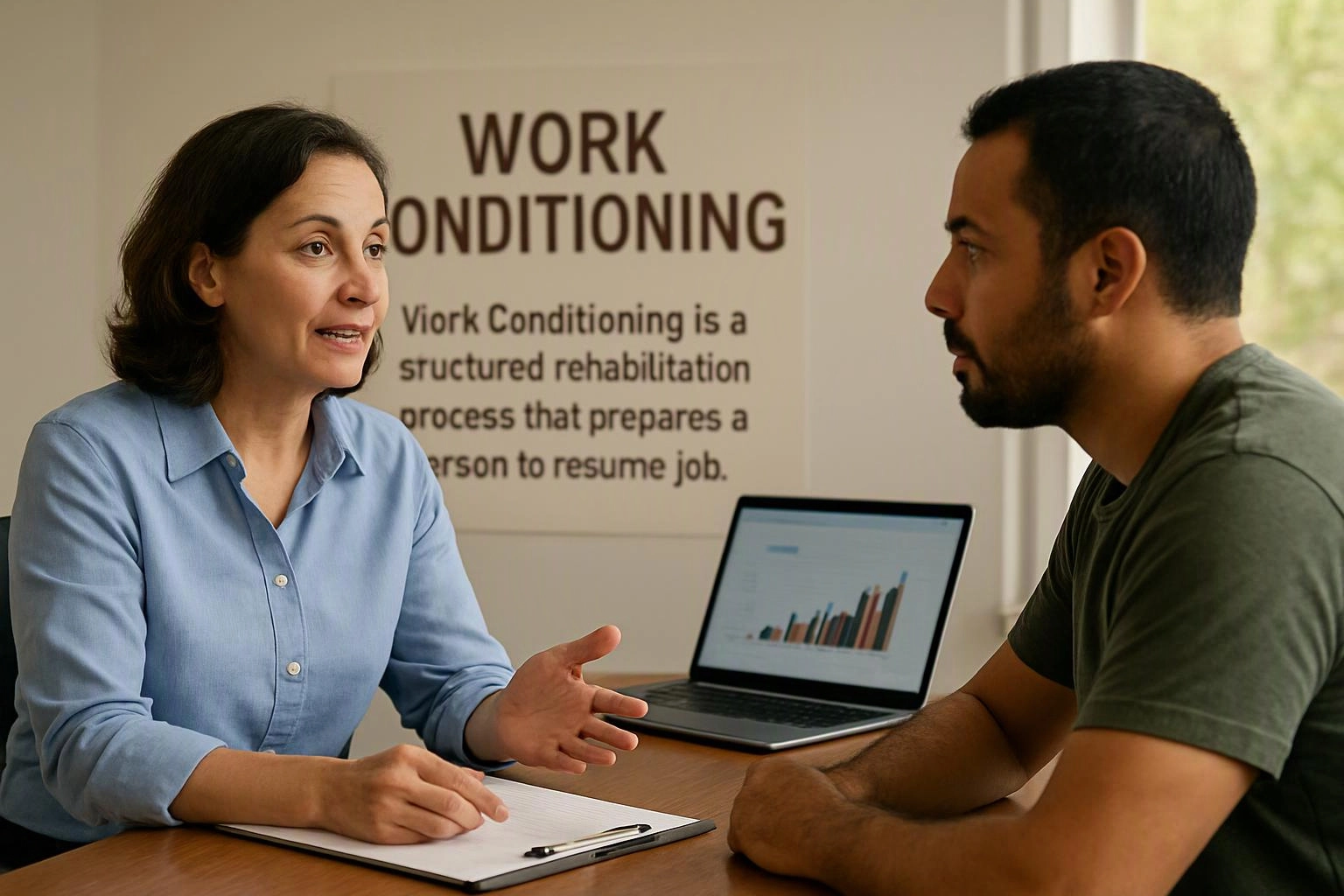
From the Arrowhead Clinic Chiropractic - Albany team
When we review Work Conditioning needs, we connect the person's reported job duties with observed movement and physical tolerance. We look for changes in control, coordination, and response during task-related activity. Our team uses those observations to guide a practical plan that reflects the demands of the work.
Work Conditioning in Practice: A Real-World Example
A warehouse worker recovering from a back strain may practice controlled lifting, carrying, reaching, and position changes that resemble regular warehouse duties. The exercises can be adjusted as movement quality and tolerance improve.
Related Services
Related Terms
Range Of Motion
Range Of Motion is the amount and direction a joint can move through its available movement…
Biomechanics
Biomechanics is the study of how forces, motion, and body structure interact during movement. It examines…
Muscle Strain
Muscle Strain is an injury to muscle fibers or the tendons that attach muscle to bone…
Soft Tissue Injury
A soft tissue injury is damage to muscles, tendons, ligaments, or other connective tissues caused by…
Arrowhead Clinic Chiropractic - Albany
Have Questions About Work Conditioning?
Contact Arrowhead Clinic Chiropractic - Albany for practical guidance on Work Conditioning and related chiropractor work in Albany.